Whether it happened on the sporting field, in a fall, at work, or in a car accident, a knock to the head comes with the same tired advice: “just rest it off” or “you’ll be right in a few days.” For most people, concussion does settle within a couple of weeks, but “resting it off” without a structured plan is one of the most common reasons recovery drags on longer than it needs to.
We’re pleased to introduce Concussion Physiotherapy at PhysiCo City, a dedicated service for anyone recovering from a mild traumatic brain injury, whether it happened on the field, in a fall, or in a motor vehicle accident.
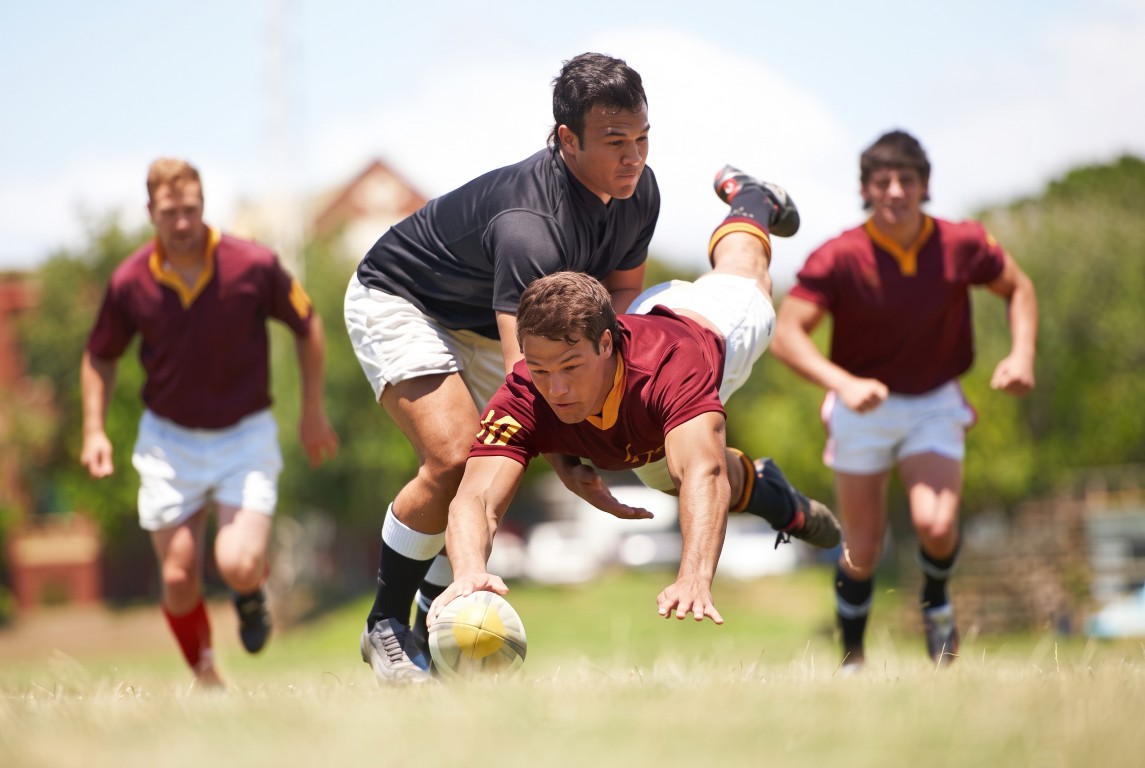
Contact sports can cause serious concussions
What is a concussion?
A concussion is a mild traumatic brain injury caused by a direct blow to the head, or a heavy jolt to the body that transmits force to the head, that temporarily disrupts normal brain function. It doesn’t usually show up on a CT or MRI scan, which is one reason it’s managed on symptoms and clinical assessment rather than imaging alone, as outlined by healthdirect Australia.
Concussion is also more common than most people realise. It’s the most frequently reported injury in community Australian football, for instance, accounting for around 15% of all injuries and affecting an estimated 1 in 13 players each season, with similar patterns across most contact and collision sports (peer-reviewed epidemiological research). Falls, workplace incidents and motor vehicle accidents make up a substantial share of concussions too, which is exactly why a clear, structured recovery plan matters no matter how the injury happened.
How is that different from “just a bump on the head”?
An ordinary bump or bruise to the scalp or skull causes local pain, tenderness or swelling at the site of impact, but it doesn’t affect how your brain is functioning. A concussion is different: the force of the impact disrupts how the brain, neck, eyes and balance system communicate with each other, even when there’s no visible mark, cut or bruise at all. That’s why someone can “look fine” immediately after a knock and still be concussed, and why concussion needs to be taken seriously every time, not just when the impact looked severe.
Symptoms can also appear straight away or develop over the following 24 to 48 hours, which is another reason concussion doesn’t behave like a typical bump. Better Health Channel notes that complaints can subside and then return, or worsen, in the hours and days after the injury, so it’s worth staying alert even once you think the worst has passed.
Symptoms of concussion
Symptoms vary widely from person to person, but they generally fall into a few groups:
Physical
- Headache
- Dizziness or balance problems
- Nausea
- Sensitivity to light or noise
- Blurred or double vision
- Fatigue
- Neck pain or stiffness
Cognitive and emotional
- Difficulty concentrating
- Feeling foggy or slowed down
- Memory problems
- Irritability or low mood
- Feeling more anxious or emotional than usual
Sleep
- Sleeping more or less than usual
- Difficulty falling asleep
- Feeling drowsy during the day
If you experience any of these symptoms, stop reading now
Seek emergency care immediately, by calling 000 or going to your nearest emergency department, if you or someone you’re with shows any of the following:
- Loss of consciousness, or increasing drowsiness or difficulty waking
- A worsening headache that does not settle
- Repeated vomiting
- A seizure or convulsion
- Increasing confusion, agitation or unusual behaviour
- Weakness, numbness or tingling in the arms or legs
- Slurred speech or difficulty speaking
- Double vision or unequal pupil size
- Significant neck pain, or pain on moving the neck
Physiotherapists do not diagnose concussion or rule out a more serious brain or spinal injury. If a head injury has just happened, or any of the above develops at any point during recovery, get proper medical care first. Better Health Channel advises treating any loss of consciousness, even briefly, as a medical emergency and calling triple zero (000) immediately. A physiotherapy assessment is appropriate once a doctor has assessed the injury and there’s no sign of a more serious condition needing urgent care.

Car accidents are a serious cause of concussions.
When to see a doctor, and when to see a physio
See a doctor or emergency department first, always, if a head injury has just happened. A doctor needs to assess it and rule out anything more serious, such as a bleed or fracture, before physiotherapy is appropriate.
See a physio once you have that medical clearance. From there, you can book directly with us, no referral needed, for assessment and management of the neck, balance and vestibular symptoms that often follow a concussion, and for a graded plan to get you back to sport, school or work safely.
Why concussion is more than “just a knock”
Instead of relying on imaging, recovery depends on understanding which systems in your body have actually been disrupted, and there are usually more of them involved than people expect.
The neck is one. A whiplash-type strain often happens alongside the head impact and can drive headaches, dizziness and neck pain long after the initial injury. The vestibular and visual systems, the ones responsible for balance and eye movement, are another. When either is affected, people report dizziness, blurred vision, difficulty concentrating or a general feeling of being “foggy.”
Because concussion looks different in almost everyone, treating it as one generic diagnosis rarely works. That’s why our approach starts with figuring out exactly what’s driving your symptoms.
What our assessment involves
Once you’ve been medically assessed and any more serious injury has been ruled out, our physiotherapists work through four areas:
- History and symptom review – how the injury happened, what’s changed since, and any previous concussions.
- Cervical spine assessment – checking whether neck movement or muscle tension is contributing to your headaches or dizziness.
- Vestibular and oculomotor screening – testing eye movement, gaze stability and balance, systems that are frequently affected but rarely checked.
- Balance and exertion tolerance testing – establishing how much physical and cognitive activity you can currently manage without symptoms flaring up.
From there, we build a plan targeted at what’s actually going on for you, rather than a one-size-fits-all approach.

A proper medical diagnosis is required before concussion physiotherapy
A graded return, not a guessing game
Getting back to sport, school or work too soon is one of the biggest risk factors for a longer recovery, with international concussion consensus guidelines warning that returning to play while symptoms are still present exposes an athlete to a heightened risk of further injury and a prolonged recovery (joint position statement on the Berlin Concussion in Sport consensus, PubMed Central). We use the stepwise graduated return-to-sport framework set out by the Australian Sports Commission’s Concussion in Sport Australia guidelines: symptom-limited activity, light aerobic exercise, sport-specific drills, non-contact training, full-contact practice (once you have medical clearance), and finally a return to competition. You only progress to the next stage once you can complete the current one symptom-free, and step back if symptoms return.
A similar staged approach applies to returning to school or work, with a gradual increase in hours, screen time and cognitive load. We can put together a written plan for teachers, employers or coaches, and we stay in contact with your GP or treating doctor throughout.
When to see us
If you’ve had a head injury, get checked by a doctor or emergency department first to rule out anything more serious. Once you have that medical clearance, book in with us to get your neck, balance and vestibular symptoms properly assessed and managed, whether you’re an adult athlete, a weekend social player, or a parent managing a teenager’s return to school after a knock on the field.
Concussion recovery isn’t about waiting it out. It’s about knowing what’s actually affected and following a plan that gets you back safely. Book online or call us at Level 2, 127 Bathurst Street, Sydney CBD, to get started. You can read more about our approach on the Concussion Physiotherapy page.
Sources
- healthdirect Australia: Concussion
- Better Health Channel: Head injuries and concussion
- Australian Sports Commission: Concussion in Sport Australia
- Joint position statement implementing the Berlin Concussion in Sport consensus, via PubMed Central
- Concussion in community Australian football, epidemiological monitoring, via PubMed Central
This article is general information, not a diagnosis. If you suspect a concussion, or notice any of the emergency signs above, seek medical care immediately.