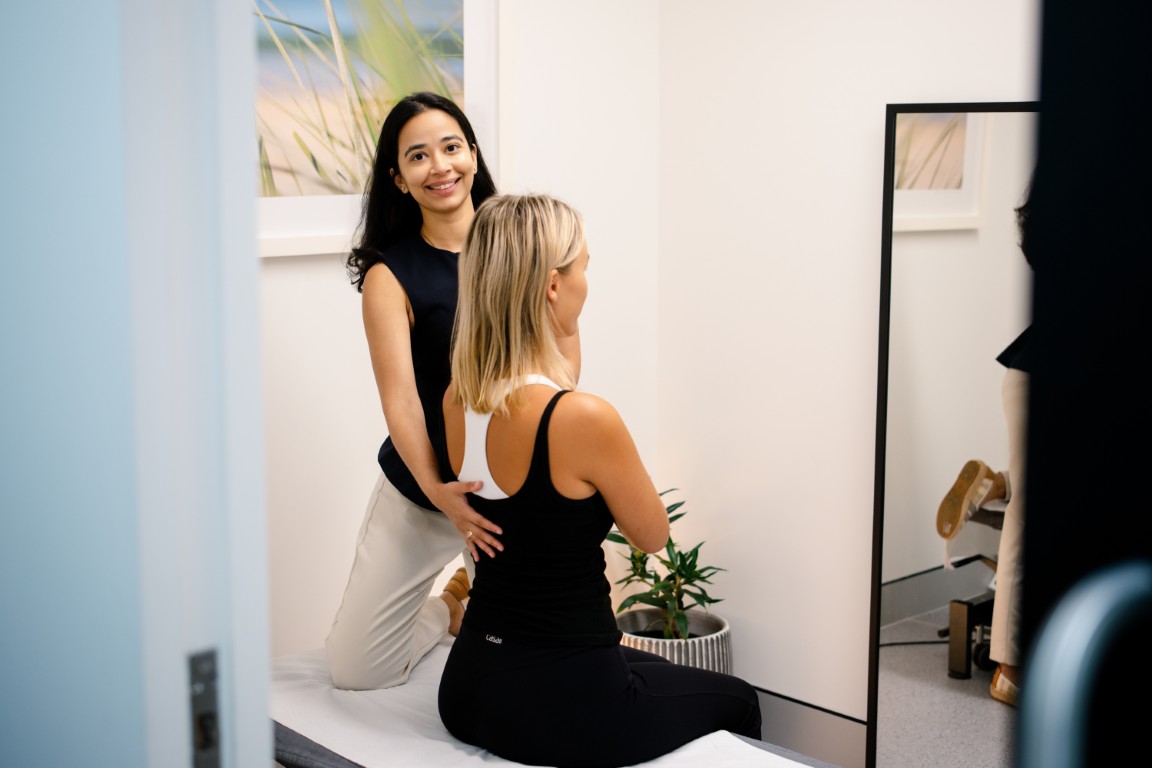
Concussion Physiotherapy in Sydney CBD
A concussion is a mild traumatic brain injury, most often caused by a knock to the head or a heavy jolt to the body during sport, a fall, or a motor vehicle accident. It needs to be taken seriously and managed with a clear, step-by-step plan.
What concussion physiotherapy
involves.
Concussion disrupts how the brain, neck, eyes and balance system work together, rather than showing up on a standard scan, and recovery is rarely a straight line.
Most people recover well with the right guidance. Pushing back into normal activity, sport or a full workload too quickly, before your symptoms have settled, is one of the more common reasons recovery drags on.
Once you have been assessed by a doctor and any more serious injury has been excluded, physiotherapy has an established role in concussion management. The neck (a whiplash-type strain to the cervical spine) and the vestibular or visual system are involved in a large proportion of concussions, and physiotherapists are specifically trained to assess and treat both directly.
Our approach combines a cervical spine assessment, vestibular and oculomotor screening, and balance and exertion tolerance testing, so your plan targets whichever systems are actually driving your symptoms rather than treating concussion as a single, generic diagnosis.
From there, we build a graded, symptom-guided return-to-sport or return-to-learn/work plan, and stay in contact with your GP, treating doctor or sports physician throughout.

Recognising the signs of concussion
Symptoms can appear immediately or develop over the following 24 to 48 hours, and they vary widely from person to person. They generally fall into a few groups.
Physical
- Headache
- Dizziness or balance problems
- Nausea
- Sensitivity to light or noise
- Blurred or double vision
- Fatigue
- Neck pain or stiffness
Cognitive & emotional
- Difficulty concentrating
- Feeling foggy or slowed down
- Memory problems
- Irritability or low mood
- Feeling more anxious or emotional than usual
Sleep
- Sleeping more or less than usual
- Difficulty falling asleep
- Feeling drowsy during the day

Our assessment approach.
History & Symptom Review
A detailed history of how the injury happened, your symptoms since, and any previous concussions, plus a check of what medical assessment you have already had.
Cervical Spine Assessment
Whiplash-type strain to the neck is common alongside concussion and can drive headache, dizziness and neck pain. We assess joint movement, muscle tension and the neck's contribution to your symptoms.
Vestibular & Oculomotor Screening
Structured testing of eye movement, gaze stability and the inner-ear balance system, both of which are frequently affected after concussion and can drive dizziness, visual disturbance and difficulty concentrating.
Balance & Exertion Tolerance Testing
Clinical balance testing and graded exercise to establish how much physical and cognitive activity you currently tolerate without provoking symptoms, which sets the starting point for your return-to-activity plan.
Graded return to sport & return to learn.
Recovery is guided by your symptoms, not the calendar. We use the internationally recognised, stepwise graduated return-to-sport framework: you move to the next stage only once you can complete the current one without your symptoms returning, and step back to the previous stage if they do.
Symptom-limited activity
Everyday activities that do not bring on or worsen your symptoms.
Light aerobic exercise
Walking or stationary cycling at a light intensity. No resistance training.
Sport-specific exercise
Running, skating or other sport-specific drills, with no risk of head impact.
Non-contact training
More complex drills and light resistance training. Still no contact.
Full-contact practice
Normal training activities, following medical clearance.
Return to sport
Normal match or competition play.
This staged exercise progression only starts once you are symptom-free at rest, which can itself take anywhere from days to weeks. From there, each stage requires a minimum of 24 hours symptom-free before moving to the next, and it is common to spend longer at any stage, or drop back a stage, if symptoms return. Your physiotherapist reviews your progress at every step, and full-contact training only goes ahead once you have medical clearance from your doctor.
Return to school & work
A similar staged approach applies to returning to school or work. It generally starts with short, low-demand periods and no screens (laptop, phone or tablet use is a common symptom trigger), then gradually builds up your hours, screen use and workload as you're able to tolerate them without symptoms flaring up. We can provide a written plan for teachers, employers or coaches where that is useful, and we work alongside your GP, sports and exercise physician, or school where appropriate, and will refer you back for medical review if your recovery is not progressing as expected or new symptoms develop.
Our point of difference.
Why Sydney chooses PhysiCo City.
Punctuality
Convenient bookings that respect your time, with minimal disruption to your day: before work, on your lunch break or after work.
Expertise & Professionalism
A highly experienced, university-qualified team that delivers consistent, evidence-based results you can rely on.
Private Treatment Rooms
Fully enclosed, private rooms so you have the undivided attention of your therapist throughout every session.
17+ Years of Experience
Trusted in Sydney CBD for over 17 years, having helped more than 25,000 clients move better and recover faster.
A Structured Approach
A graded, symptom-guided plan built on recognised return-to-sport and return-to-learn principles, in coordination with your treating doctor.
Accessible Value
Open 6 days a week with on-the-spot HICAPS claiming for all health funds, plus Medicare, WorkCover, CTP, DVA, NDIS and more.
Setting the Standard.
Respected by the Industry.
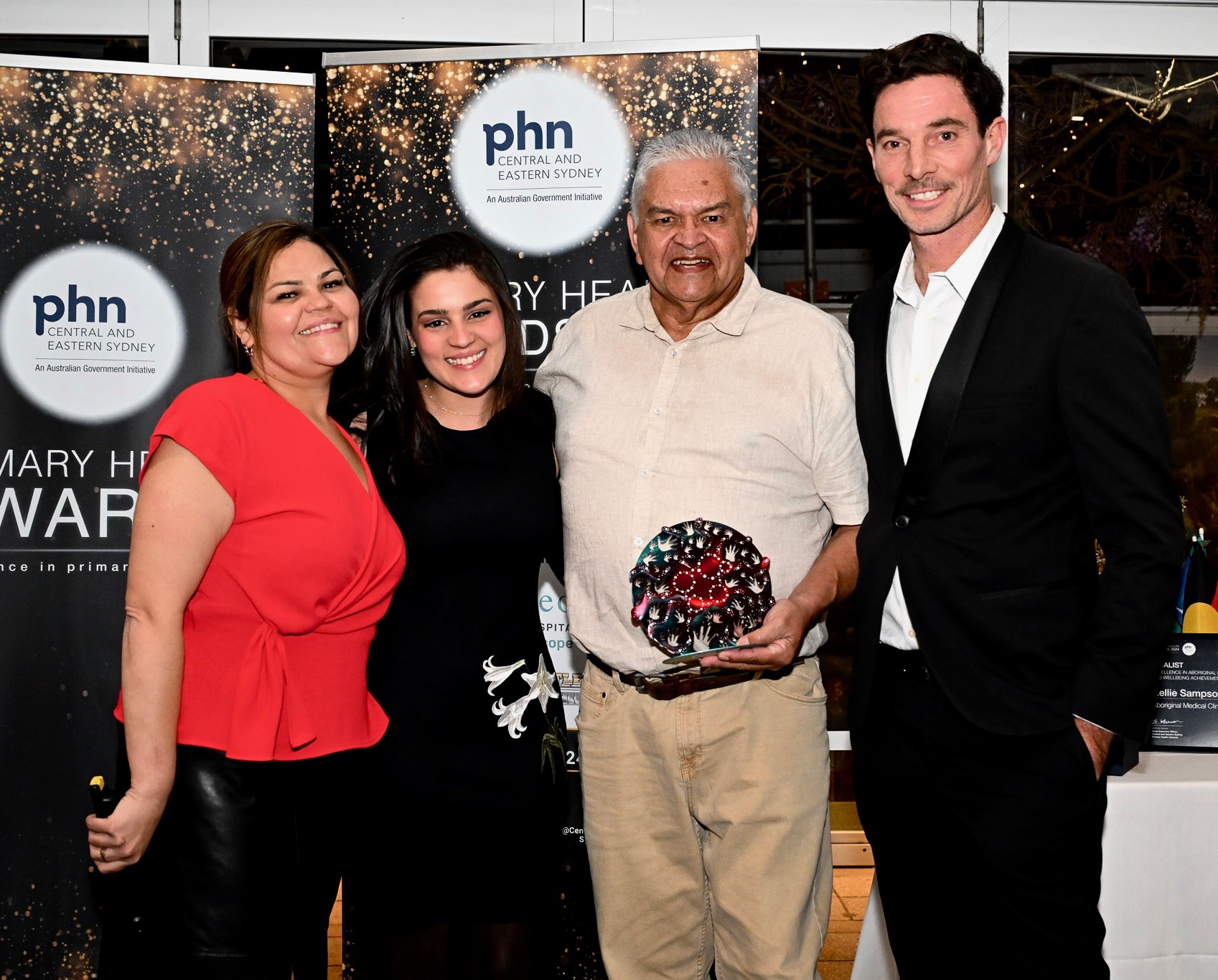
Award-winning care starts with putting people first. The recognition we've received over the years highlights our ongoing commitment to clinical excellence, personalised treatment and a warm, supportive experience for every patient who walks through our doors.
- 2026 City Suburbs Local Business Awards Finalist: Outstanding Professional Medical Services
- Top Physiotherapy Treatments Clinic in APAC 2026 (HBR)
- #1 The Quality Business Awards 2025
- Best Physiotherapy Clinic in NSW for 2024
- #4 Sydney's Best Physiotherapist
- Excellence in Aboriginal Health and Wellbeing Achievement
- Excellence in Allied Health Practice







Trusted by Peers. Proven by Results.
Delivering the standard of care expected by physiotherapists themselves.

Leaders in Our Field
All of our health practitioners undertake regular seminars, courses, and lectures to remain at the forefront of new technologies, principals, and techniques which emerge in our field of practice.

Teamwork
Our team work together to provide the best client experiences and outcomes. Collaboration with patient journeys allows our staff to expand their clinical field and optimise every client they see.

Dedication to Learning
All our staff have a commitment to lifetime learning, seeking new ideas to better ourselves, and being resourceful through seeking answers and solutions to challenges and complex cases.

Professionalism
Here at PhysiCo City we run a tight ship. Punctuality and time management are a high priority for us knowing how important your time is. Every client gets the respect and empathy they deserve.
Health Insurance.
We got you covered.
We are a Bupa Network Provider, however, we accept all Health funds, Medicare referrals, Workcover, Third Party, DVA, NDIS, and International Insurance.






Concussion physiotherapy FAQs.
Everything you need to know.
Can't find what you're looking for? Our friendly reception team is happy to help.
Yes, if the injury has just happened. A doctor or emergency department needs to assess a head injury first and rule out anything more serious, such as a bleed or fracture, before physiotherapy is appropriate. Once you have that medical clearance, you can book directly with us for assessment and management of the neck, balance and vestibular symptoms that often follow.
A concussion is a mild traumatic brain injury caused by a direct blow to the head, or a heavy jolt to the body that transmits force to the head, that temporarily disrupts normal brain function. It does not usually show up on a CT or MRI scan, which is one reason it is managed on symptoms and clinical assessment rather than imaging alone.
It varies considerably from person to person, so a specific figure would be misleading. Many adults find their symptoms settle within one to two weeks, and it is common for this to take longer in adolescents. Some people experience symptoms beyond the usual window, which is often called persistent post-concussion symptoms and needs ongoing medical and physiotherapy management. Your physiotherapist can give you a more realistic picture based on your assessment.
Physiotherapy addresses the parts of a concussion that fall within our scope: the neck, the vestibular and visual systems, and your tolerance for physical and cognitive activity. It is not a substitute for medical diagnosis or management of the brain injury itself, and we work alongside your GP or treating doctor rather than in place of them.
It is assessment and treatment of the eye-movement and inner-ear balance systems, which are frequently affected after concussion and can cause dizziness, visual disturbance, difficulty concentrating and a feeling of being off balance. Treatment involves specific, graded exercises that retrain these systems, progressed as your tolerance improves.
That depends on how you progress through the graded return-to-sport stages, not on a fixed number of weeks. You move through symptom-limited activity, light aerobic exercise, sport-specific drills, non-contact training and full-contact practice, with medical clearance required before contact resumes, then a return to competition. Your physiotherapist tracks your progress through each stage.
Usually in stages, starting with short periods of low-demand activity and building up hours, screen time and cognitive load as tolerated, rather than an all-or-nothing return. Concussion in children and adolescents is generally managed more conservatively than in adults, and we work closely with your child's GP or paediatrician throughout.
No, you can book directly with us. A referral is only required for specific funding pathways, such as Medicare, DVA, WorkCover or a CTP claim following a motor vehicle accident.
Yes, where the relevant cover applies. We have HICAPS on site for on-the-spot private health claims, and we work with Medicare (under a GP Chronic Condition Management Plan), WorkCover for a work-related head injury, CTP for a motor vehicle accident, and DVA and NDIS where applicable. Bring your claim or referral details to your first appointment.
Any discharge summary or notes from your doctor or emergency department visit, a list of your current symptoms, details of how the injury happened, and your health fund card, claim number or referral if one of the funding pathways above applies to you.
Tell us. If your recovery is slower than expected, or new symptoms appear, we will refer you back to your GP or treating doctor for medical review, which may include a referral to a sports physician or neurologist. Persistent symptoms are manageable, but they benefit from being picked up and reviewed rather than pushed through.
We are at Level 2, 127 Bathurst Street, Sydney CBD, in the Gadigal Station Building, directly above Gadigal Metro Station, and a short walk from Town Hall and Museum stations. Paid parking is available at Wilson Parking on Bathurst Street and several nearby car parks.
Find us in the heart of Sydney.
Right above Gadigal Metro Station.
-
Our Clinic Gadigal Station Building Level 2, 127 Bathurst Street Sydney NSW 2000
-
Opening Hours Mon to Fri – 8:00am to 6:30pm Sat – 10:00am to 2:00pm Sun – Closed
-
Phone 02 9267 3775
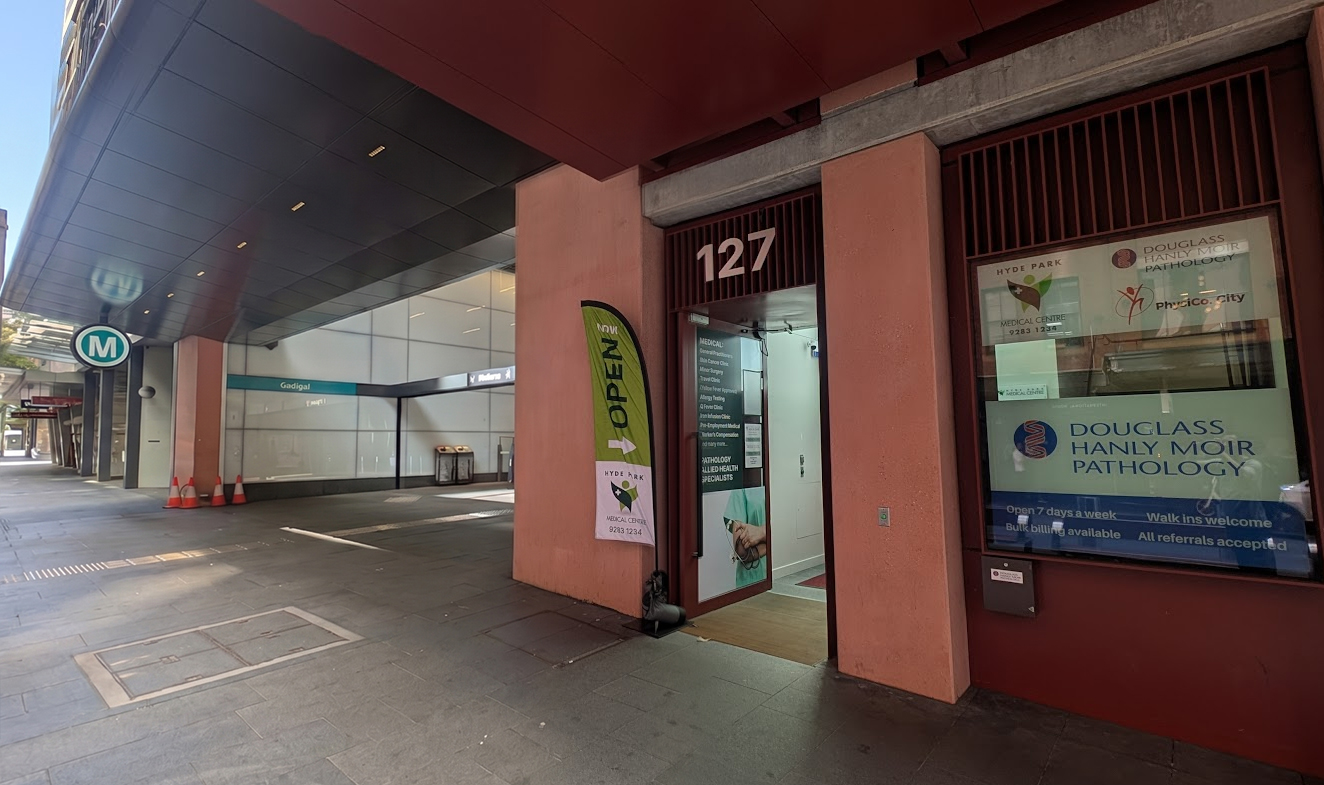
Coming via Metro?
We're just steps from the platform.
- Take the Bathurst Street exit.
- Come out of the gates and turn left.
- We're the first door on the left.
Take the first step.
Expert care, ready when you are.
- On the spot Medicare & private health insurance rebates available
- Highly experienced team available 6 days a week
- Located in Sydney CBD, next to the Gadigal Metro Station
- Serving Sydney clients for over 17 years.
- Helping over 25,000+ clients