HYROX Physiotherapy in Sydney CBD
HYROX combines 8 km of running with eight functional workout stations, and training for it loads your knees, calves, back, shoulders and grip week after week. If something has started to niggle, our physiotherapists can assess it and help you plan how to keep training where possible.
What HYROX physiotherapy
involves.
HYROX training mixes running volume with heavy sled work, lunges, carries and wall balls. Most problems build up gradually from that combination rather than from a single incident.
Early research on HYROX athletes found that most injuries were overuse injuries, with the knee and lower leg carrying the biggest share. That pattern makes sense: the legs work through every run and most of the stations, often while already fatigued.
Our assessment looks at the sore area itself and at the training behind it: your weekly running, your station volume, recent changes in load, and how your technique holds up when you are tired. That helps identify what is likely driving the problem, not just where it hurts.
A niggle does not always mean stopping completely. Where it is appropriate, we help you adjust your training, for example swapping some running for the rower, reducing lunge volume or lightening the sled, while a structured strength and loading program builds you back up.
New to the format, or want to see what each of the eight stations asks of your body? Read our guide: What is HYROX? Stations, training and common injuries.

Common HYROX injuries we assess and manage
These are the areas that commonly come up in HYROX training, based on early HYROX research and on what is known about running and functional fitness injuries.
- Knee pain, including patellofemoral pain and patellar tendinopathy
- Achilles tendinopathy and calf strains
- Shin pain and lower leg overload
- Hamstring strains and proximal hamstring tendinopathy
- Hip and glute pain from lunges and sled work
- Lower back pain with the sled, rower and carries
- Shoulder pain from wall balls, the SkiErg and burpees
- Elbow, forearm and grip-related pain
- Wrist pain from burpees
- Recurring flare-ups of an old injury as training load rises

Our approach.
Injury & Training History
How and when the pain started, your running and station volume, recent changes in load, previous injuries and your upcoming race date.
Movement & Station Assessment
A physical examination of the affected area plus the movements behind it, such as squatting, lunging, hinging, pushing and landing.
Treatment & Graded Loading
Hands-on treatment where it helps, and a progressive strength and loading program built around the stations and running you need to get back to.
Training & Race Planning
Practical changes to your training while symptoms settle, and a staged plan for building back up towards running, full stations and race-pace sessions.
Our point of difference.
Why Sydney chooses PhysiCo City.
Punctuality
Convenient bookings that respect your time, with minimal disruption to your day: before work, on your lunch break or after work.
Expertise & Professionalism
A highly experienced, university-qualified team that delivers consistent, evidence-based results you can rely on.
Private Treatment Rooms
Fully enclosed, private rooms so you have the undivided attention of your therapist throughout every session.
17+ Years of Experience
Trusted in Sydney CBD for over 17 years, having helped more than 25,000 clients move better and recover faster.
Training-Aware Rehab
Where it is appropriate, we adjust your training rather than stop it, and build you back up with a structured, progressive loading plan.
Accessible Value
Open 6 days a week with on-the-spot HICAPS claiming for all health funds, plus Medicare, WorkCover, CTP, DVA, NDIS and more.
Setting the Standard.
Respected by the Industry.
Award-winning care starts with putting people first. The recognition we've received over the years highlights our ongoing commitment to clinical excellence, personalised treatment and a warm, supportive experience for every patient who walks through our doors.
- 2026 City Suburbs Local Business Awards Finalist: Outstanding Professional Medical Services
- Top Physiotherapy Treatments Clinic in APAC 2026 (HBR)
- #1 The Quality Business Awards 2025
- Best Physiotherapy Clinic in NSW for 2024
- #4 Sydney's Best Physiotherapist
- Excellence in Aboriginal Health and Wellbeing Achievement
- Excellence in Allied Health Practice








Trusted by Peers. Proven by Results.
Delivering the standard of care expected by physiotherapists themselves.

Leaders in Our Field
All of our health practitioners undertake regular seminars, courses, and lectures to remain at the forefront of new technologies, principals, and techniques which emerge in our field of practice.

Teamwork
Our team work together to provide the best client experiences and outcomes. Collaboration with patient journeys allows our staff to expand their clinical field and optimise every client they see.

Dedication to Learning
All our staff have a commitment to lifetime learning, seeking new ideas to better ourselves, and being resourceful through seeking answers and solutions to challenges and complex cases.

Professionalism
Here at PhysiCo City we run a tight ship. Punctuality and time management are a high priority for us knowing how important your time is. Every client gets the respect and empathy they deserve.
Health Insurance.
We got you covered.
We are a Bupa Network Provider, however, we accept all Health funds, Medicare referrals, Workcover, Third Party, DVA, NDIS, and International Insurance.






HYROX physiotherapy FAQs.
Everything you need to know.
Can't find what you're looking for? Our friendly reception team is happy to help.
Not always. Many niggles can be managed by adjusting training rather than stopping completely, for example swapping some running for the rower, reducing lunge or wall ball volume, or lightening the sled. Your physiotherapist can help you work out what to keep, what to change and how to build back up. If pain increases during or after a session, stop and get it assessed.
Research on HYROX is still early. One 12-week study of 89 HYROX athletes found most injuries were overuse injuries, with the knee and lower leg carrying the biggest burden and shoulder injuries relatively uncommon. In practice we also see lower back, Achilles, hamstring and grip-related problems, which reflect the running and station demands of the race.
Yes. A physiotherapy assessment can look at strength, movement and training load, particularly if you have had a previous injury, which early HYROX research flagged as a possible risk marker. Your physiotherapist can suggest strength work and training adjustments to discuss with your coach.
As early as you can. Getting assessed while there are still weeks to go gives more room to adjust training and build load back up before the race. If your race is close, your physiotherapist can help you weigh up your options, but the decision to race is yours, together with any medical advice you receive.
It varies with the type of injury, how long you have had it, how irritable it is and your training goals, so a specific figure would be misleading. Your physiotherapist can give you a more realistic picture after your assessment and adjust the plan as you progress.
Yes, with your consent. We can share the key points of your plan, such as which movements to modify and how to progress load, so your coaching and rehab work together rather than against each other.
If you have a heart condition or another medical condition, or you are new to intense exercise, check in with your GP before you start. HYROX is a hard effort: in one study, recreational athletes spent most of a simulated race close to their maximum heart rate. Our exercise physiologists can also help build a program that suits your health and fitness.
No, you can book directly with us. A referral is only required for specific funding pathways, such as Medicare, DVA or WorkCover.
Yes, if your policy includes physiotherapy extras cover. We have HICAPS on site for on-the-spot claiming, so you only pay the gap on the day.
No. PhysiCo City is not affiliated with or endorsed by HYROX. We are a physiotherapy clinic that assesses and manages injuries in people training for and competing in HYROX events.
We are at Level 2, 127 Bathurst Street, Sydney CBD, in the Gadigal Station Building, directly above Gadigal Metro Station, and a short walk from Town Hall and Museum stations. Paid parking is available at Wilson Parking on Bathurst Street and several nearby car parks.
Find us in the heart of Sydney.
Right above Gadigal Metro Station.
-
Our Clinic Gadigal Station Building Level 2, 127 Bathurst Street Sydney NSW 2000
-
Opening Hours Mon to Fri – 8:00am to 6:30pm Sat – 10:00am to 2:00pm Sun – Closed
-
Phone 02 9267 3775
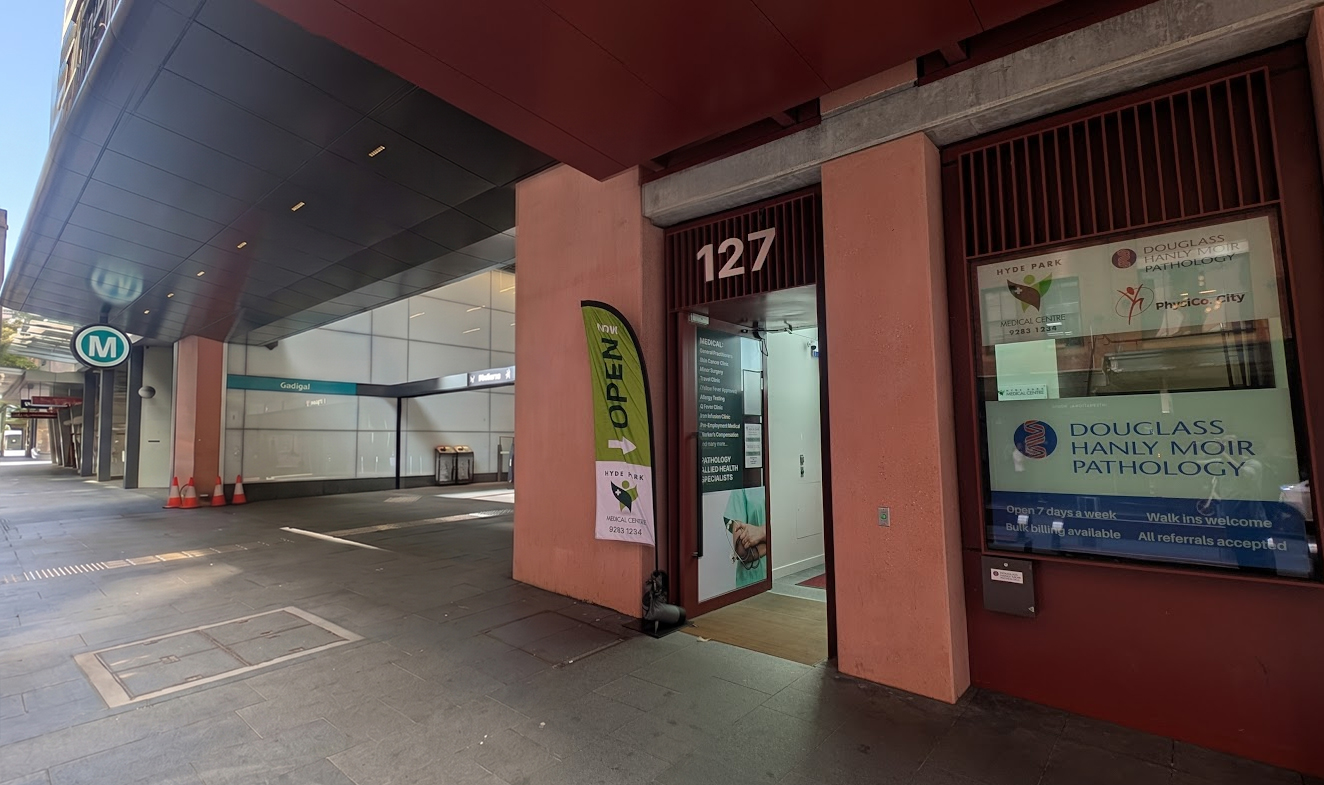
Coming via Metro?
We're just steps from the platform.
- Take the Bathurst Street exit.
- Come out of the gates and turn left.
- We're the first door on the left.
Take the first step.
Expert care, ready when you are.
- On the spot Medicare & private health insurance rebates available
- Highly experienced team available 6 days a week
- Located in Sydney CBD, next to the Gadigal Metro Station
- Serving Sydney clients for over 17 years.
- Helping over 25,000+ clients