
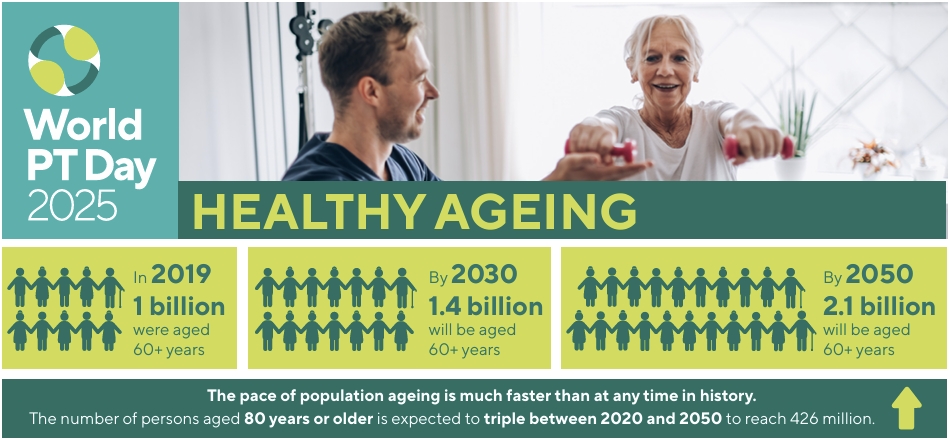
As we celebrate World Physiotherapy Day on 8 September, the spotlight this year is on healthy ageing. Specifically preventing frailty and falls. With populations living longer than ever, staying strong, steady, and independent matters at every age. Physiotherapists are uniquely trained to help you do exactly that.
According to World Physiotherapy, people who are more active are up to 41% less likely to have frailty. Strength, balance, and flexibility are the foundations of confident movement, and it’s never too late to start. Whether you’re in your 40s or your 80s, a personalised exercise program can reduce fall risk, protect bone and muscle, and keep you doing what you love. Learn more about this year’s theme via World Physiotherapy’s official campaign resources: World PT Day 2025 materials.
Why falls prevention matters
A single fall can have a ripple effect: pain, fear of moving, reduced activity, and loss of independence. The good news: many falls are preventable. Improving lower-limb strength, balance reactions, and home safety can dramatically reduce risk. Physiotherapists assess your unique movement patterns and medical history, then create a clear, doable plan to build confidence and stability.
How physiotherapy helps you age actively
Physiotherapists blend assessment, targeted exercise, and coaching to help you move more and move better. After a thorough assessment, you’ll receive an individualised plan that usually includes progressive strength training, balance and coordination drills, gait and mobility work, flexibility and joint health strategies, and practical fall-prevention tactics tailored to your daily life.
Progressive strength training is particularly powerful for combating and managing sarcopenia (age-related muscle loss). Done correctly, and progressed gradually, it can improve power, posture, and resilience in just a few weeks.
Simple ways to get started today
If you’re new to exercise or returning after a break, start small and build steadily. Consider these ideas to ease in safely and effectively: choose activities you enjoy and can repeat most days, like brisk walking, Tai Chi, or light resistance training; add short balance moments into your day (e.g., stand on one leg at the kitchen bench, eyes forward, light fingertip support if needed); prioritise leg strength with sit-to-stand practice from a chair, slow step-ups, and heel raises; review your home for trip hazards and improve lighting where needed; book a physiotherapy assessment to personalise and progress your plan.
If you have pain, dizziness, recent falls, or medical conditions, speak with a physiotherapist or your GP before starting a new program.
For carers and family members
If you support an older adult, you can make a big difference by encouraging small, daily movement; helping set up a safe space for exercises and walking; joining appointments to understand the plan; and celebrating progress. It boosts confidence and adherence.
Healthy ageing is not about slowing down, it’s about moving with purpose. With the right plan and support, you can stay stronger, steadier, and more independent at every stage of life. If you’re ready to start, we’re here to help.